 |
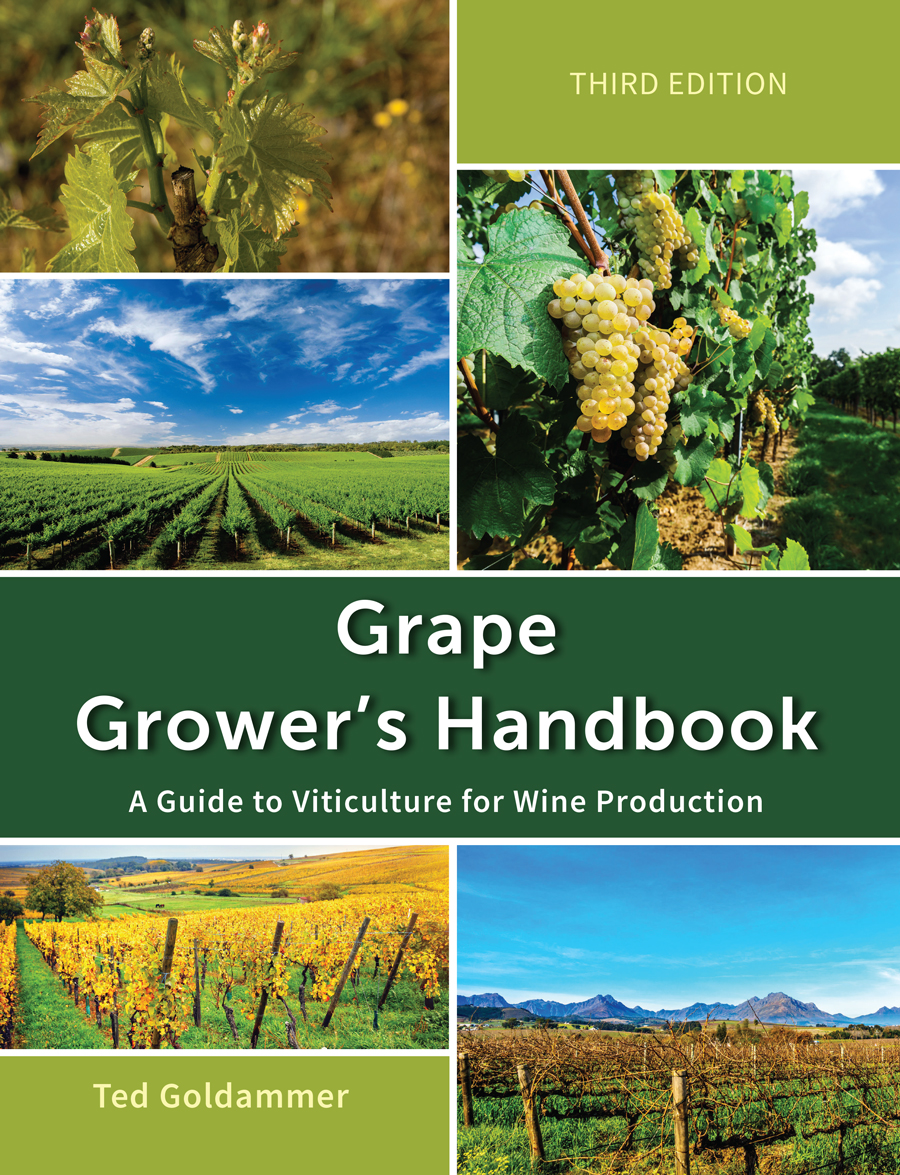
Grape Grower's Handbook
A Guide To Viticulture for Wine Production
- Publisher: Apex Publishers
- Author: Ted Goldammer
- Publication Date: March 2026
- Printing History: Fourth Edition
- ISBN (13): 979-8-90213-569-2
- Page Content: 558 pages
- Book Cover: Soft cover-nylon matte scuff resistant Layflat film lamination
- Binding: Perfect
- Trim size: 8 1/2" x 11" x 1"
- Book Art: Color
- Tables: 113
- Images: 213
- Illustrations/Charts: 35
- Produced and Printed in U.S.A.
Buy from Apex
- Retail Price: $99.95
- Your Price: $94.95
- FREE GROUND SHIPPING
- Ships 2-4 Business Days
- How to Order
About this Book
Grapes are among the first fruit species to be domesticated, and they are today the world’s most economically important fresh fruit crop, used to make a variety of fresh, dried, and processed products, such as wine. It has been said that “the secret to great wine starts in the vineyard,” and “you can make poor-quality wine out of high-quality grapes, but you cannot expect to make great wine from poor-quality grapes.” Growing high-quality grapes for premium wine requires the grower to understand the principles of viticulture fully. The new revised edition of the Grape Grower’s Handbook is a complete rewrite. It provides the grower with a broad spectrum of expertise and knowledge in growing grapes for wine grape production in commercial vineyards. Some books offer a strong academic perspective with little practical application to growing grapes for wine production. Other books provide a broad overview of growing grapes but offer little detail, while most books narrowly focus on more traditional topics of grape growing. Unlike most books on growing grapes for wine production, the Grape Grower’s Handbook is meant to be a stand-alone publication that describes all aspects of wine grape production. The book is written in a nontechnical format designed to be practical and well-suited for field application. Some of the topics discussed, but not limited to, include grapevine growth, varieties, rootstocks, climate requirements, training and pruning, canopy management, development and nutrition, water and soil management, pests and diseases, pesticide application, frost protection, winter protection of grapevines, cover crops, and pre-harvest operations. The book is thoughtfully organized, presenting a seamless flow of topics within chapters that makes it easy to find specific information of interest to the reader. The information in this book is distilled from a variety of sources, including scientific literature, extension publications, trade publications, reader feedback, and the generous sharing of years of experience by growers. This book also offers the added value of numerous citations, providing in-depth discussions on many topics. The book is thoughtfully organized in an easy-to-read format, presenting a seamless flow of topics within chapters. The Grape Grower’s Handbook has removed some of the intuition and guesswork in understanding how to grow wine grapes. The result is a more consistent product of higher quality, providing a practical “real-world” application of vineyard operations. The primary audience includes growers, extension agents, crop consultants, technical industry representatives, and students studying viticulture.